Madison Heights, MI · Licensed & Insured (248) 817-6913 Request a Bid

Building Maintenance

Commercial drywall in Metro Detroit

Metal stud framing, hang, tape and finish for offices, retail, industrial and multi-family buildings across Metro Detroit, plus the patch-and-repair work property managers actually call about.

What We Do

The trade every project runs through

Drywall sits in the middle of every interior schedule: it can't start until mechanical rough-ins finish, and nothing after it (paint, flooring, millwork) can start until it's done. When drywall slips, the whole job slips, which is why the trade gets bid on price and remembered on reliability. AGP Construction self-manages this trade precisely because it controls the calendar on our office and retail build-outs, and we do the same work as a standalone contract for other GCs, owners and property managers across Metro Detroit.

The scope runs from metal stud framing through hanging, taping and finishing, to the unglamorous work that keeps buildings presentable: patching, water-damage repair and texture matching after every trade that cuts a hole and walks away.

Scope

Drywall work we take on

Structure

Metal stud framing

Interior partitions, furring, soffits, ceiling framing and shaft walls: laid out from the drawings, plumb and on module, so every trade that follows lands exactly where the layout promised.

Enclose

Hang, tape & finish

Board hung tight, joints taped and finished to the specified level: Level 4 for typical walls, Level 5 where critical light or dark paint will find every flaw. We'll tell you which one your space actually needs.

Code

Fire-rated assemblies

One- and two-hour partitions, shaft walls, demising walls between tenants: built to the UL listing, sealed at every penetration, documented for the inspector.

Quiet

Sound assemblies

Insulated STC walls, resilient channel, double-layer board and full-height partitions for offices, clinics and multi-family buildings: specified and built for the noise problem you actually have, not a generic one from a catalog.

Overhead

Ceilings

Acoustical grid and tile, drywall ceilings, bulkheads and soffit details. The one plane where your lighting, diffusers and sprinkler heads all have to agree with each other.

Repair

Patch, repair & texture match

Water damage, door-handle holes, tenant-turnover scars, access cuts left behind by other trades: repaired, texture-matched and painted so that nobody walking the space can find where the problem used to be.

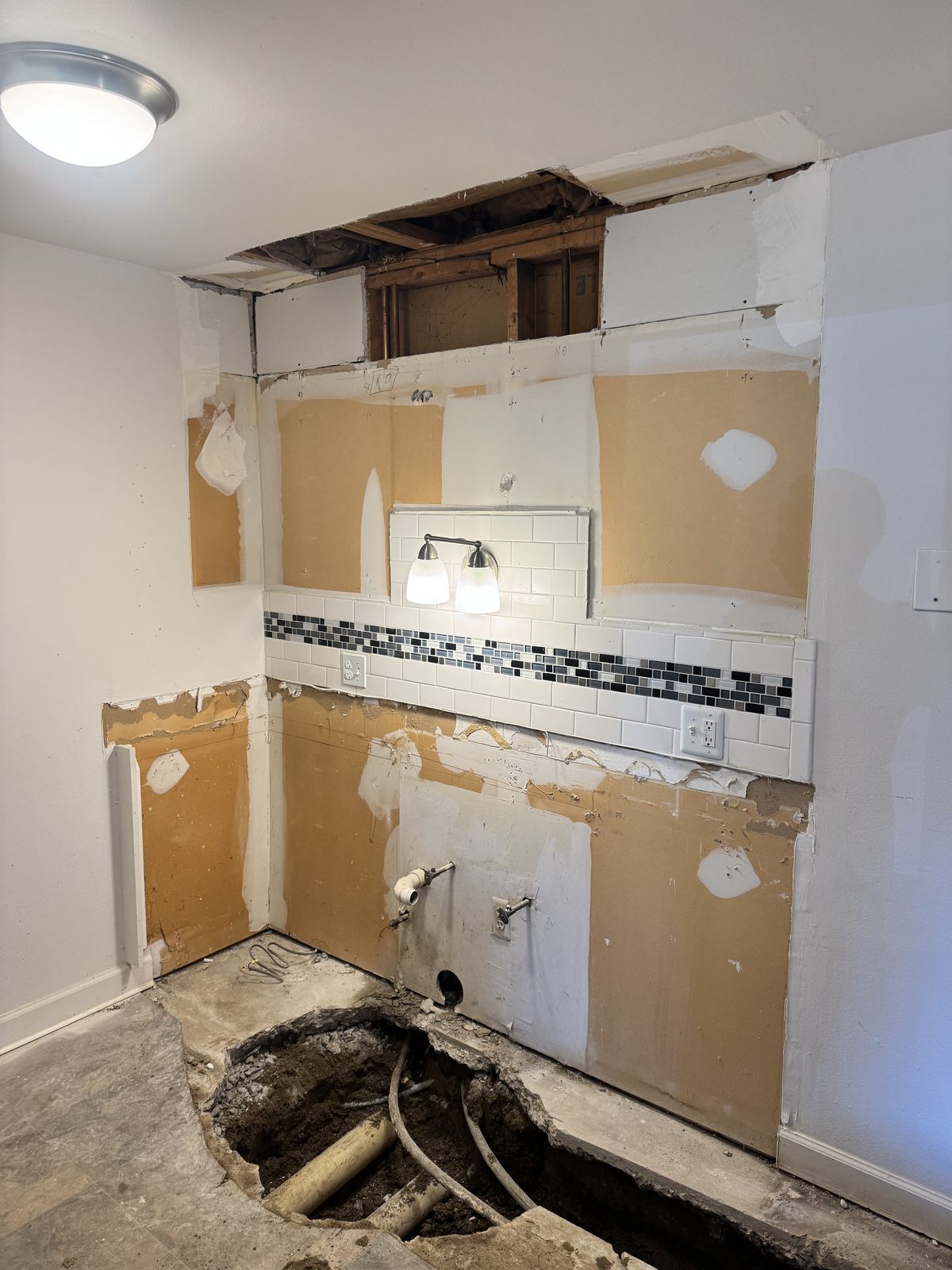
Kitchen wall opened during a unit renovation

The Real Questions

Finish levels, ratings and why they matter to your budget

Finish level is a specification, not a vibe. Level 4 is the commercial standard and right for most walls. Level 5 (a skim coat over everything) exists for walls that get grazing light, gloss or deep colors, where Level 4 will telegraph every joint at 4 PM in March. Specifying Level 5 everywhere wastes money; specifying it nowhere embarrasses a lobby. We walk the space and put the right level on the right walls, in writing.

Fire ratings are assemblies, not sheets. A rated wall is a listed system: specific studs, board layers, fasteners and sealed penetrations. The most common failure we see in existing buildings is a once-rated wall ruined by years of unsealed cable and pipe penetrations. We build new assemblies to the listing and can survey and repair existing ones before your insurance carrier or fire marshal finds them first.

Occupied buildings, dust and daylight

Drywall is dusty by nature, which is why occupied-space work runs behind sealed plastic barriers with zipper doors, negative air where warranted, floor protection on the path in and out, and sanding scheduled after hours. Tenants should learn about a drywall project from the notice, not the smell of joint compound.

Ceilings: grid or drywall, decided by access

The ceiling choice is really a maintenance-access decision. Acoustical grid gives every future trade a lift-out path to the cable, duct and valves above, which is why it owns most office and retail space. Drywall ceilings and bulkheads look cleaner and carry design moments, but every future access becomes a cut-and-patch. We build both, mix them deliberately (grid in the field, drywall where the design earns it) and set access panels where the mechanical drawings say someone will eventually need a hand inside.

How drywall gets priced

Drywall bids move on a handful of levers: wall height and board layers, finish level, fire and sound ratings, how much of the work is overhead, and how occupied the building is while we do it. Our bids break those out (framing, hang, finish, per assembly type) so you can see what the money buys and compare us line by line against any other number. Unit pricing for repeat work (per patch, per unit turn, per demising wall) is standard for property-management clients.

Water damage: dry first, rebuild second

Wet drywall is a sequence, not just a patch. The source gets fixed first: often a roof call, then affected material gets opened, dried and checked before anything new goes up, because board over damp framing is how a small leak becomes a mold remediation invoice. Once the cavity is verifiably dry, we rebuild the assembly to its original rating, match the texture, and paint the repair to disappear. Property managers get the documentation trail (moisture readings, photos, dates) that insurers and tenants both eventually ask for.
For GCs & Property Managers

A sub that protects your schedule

If you're a general contractor, you know the drywall slot is where interior schedules live or die. We show up with the crew size we promised, sequence rooms so painters start behind us before we're finished, and communicate in dates, not vibes. If you're a property manager, our repair crews close out the small tickets (patches, texture, touch-ups) with photos in the work-order system, priced per visit or on a standing arrangement. Either way, the measure is the same: the trades behind us never wait on us, and the tickets behind us never reopen.

L4/L5finish levels specified wall by wall, in writing
1 to 2 hrfire-rated assemblies built to the UL listing
48 hrtypical turnaround on standard patch-and-paint tickets

FAQ

Commercial drywall questions, answered straight

Do you handle small repair jobs, or only full projects?

Both. Property managers use us for patch-and-paint tickets, water-damage repairs and tenant-turnover fixes; owners and GCs hire us for full framing-through-finish packages. Small work is how most long relationships with us started: a patch done right is the cheapest audition either side will ever get.

What's the difference between Level 4 and Level 5 finish?

Level 4 is the commercial standard: finished joints and fasteners, ready for typical paint. Level 5 adds a full skim coat for walls under grazing light, gloss or dark colors. The honest spec uses Level 5 only where the light demands it; we'll mark up your plan wall by wall.

Can you match an existing texture or old plaster?

Yes. Texture matching is craft work. We sample, match and blend the repair area so the fix disappears, including on older plaster walls common in Royal Oak and Ferndale-era buildings, where the right answer is often a hybrid plaster-and-board repair.

Do you build fire-rated and sound-rated walls?

Yes: one- and two-hour listed assemblies, shaft walls, demising walls, and insulated STC partitions with resilient channel or double-layer board where the noise problem calls for it. Penetrations get firestopped and the assembly gets documented for inspection.

Do you install acoustical ceiling grid and tile?

Yes: new grid systems, tile swaps and repairs, and the bulkhead-to-grid transitions that make mixed ceilings read as intentional. Where an old ceiling is staying, we match tile lines rather than leaving a checkerboard of new-white against twenty years of patina.

Can you work while our building is occupied?

Yes: sealed dust barriers, negative air where warranted, protected paths, after-hours sanding and daily cleanup are standard. Occupied work is most of what building maintenance means, and we run it that way.

Walls to build, or walls to fix?

From a full floor of framing to a Tuesday patch ticket: send it over and we'll price it straight.

Request a Bid